Showing posts with label Jungle. Show all posts

Wednesday, 17 October 2012

Back to Borneo

We made our first trip to Sarawak nearly two years ago and now we're going back . . . with my parents in-tow (they'll do fine, really).

To get everyone prepared for our journey, I have been re-reading and insisting that everyone else read Redmond O'Hanlon's book, Into the Heart of Borneo.  This is one of my all time favourite non-fiction books and is essential reading for armchair adventurers and hardened travellers alike.

Redmond, his poet-sidekick James Fenton and their three charming and resourceful Iban guides all set off on an incredible adventure deep into the jungle in search of the Bornean rhinoceros. Pumped full of tuak (native rice wine), arak (a lethally strong rice brandy), hoards of sticky rice and boney river fish they have many (mis)adventures - particularly with the local wildlife, which includes:

  • 166 species of snakes: including 2 species or python, 50 venomous snakes including, aggressive sea snakes which have been known to swarm in the thousands, three kinds of cobra, pit vipers and river snakes.  Let's also not forget the flying tree snakes.
  • leeches: giant leeches, up to two feet long and tiny leeches that live in rivers and streams only as wide as a thread that patiently wait for you to drink them down so they can feast on you internally.
  • mosquitoes. Enough said.

Less scary native species include the elusive clouded leopard, cranky sun bear, big-eyed tarsiers, tiny slow loris, agile gibbons (they can swing from branch to branch for distances of up to 50 ft at speeds up to 35 mph), mighty orang-utans and countless species of birds including the revered hornbill.

Although parts of Borneo are now as developed as anywhere else in Malaysia, deep in the jungle there are still unruly natives prowling about with lethal blowpipes and who were reportedly head-hunters up until the 1960s. Despite ever-increasing development and the devastating destruction of huge swathes of primary rainforest for ever-expanding oil palm plantations, Borneo still possess a slightly wild edge.  It's not New Guinea, but it sure ain't a tourist-packed Thai island either.

We won't be hitting the jungle quite so hard as Redmond and James, but we have every intention of spotting a few orang-utans, visiting a Dayak longhouse, squeezing in a few jungle treks of our own, relaxing on the beach (hopefully without sea snakes!) and no vacation would be complete (especially with Thomas Galli) without a few beverages.  I can't wait to be back in Borneo.

Monday, 13 August 2012

Thai tales

Apologies for the hiatus, but I've been on the road ticking off a few more stops on my endless travel checklist. 

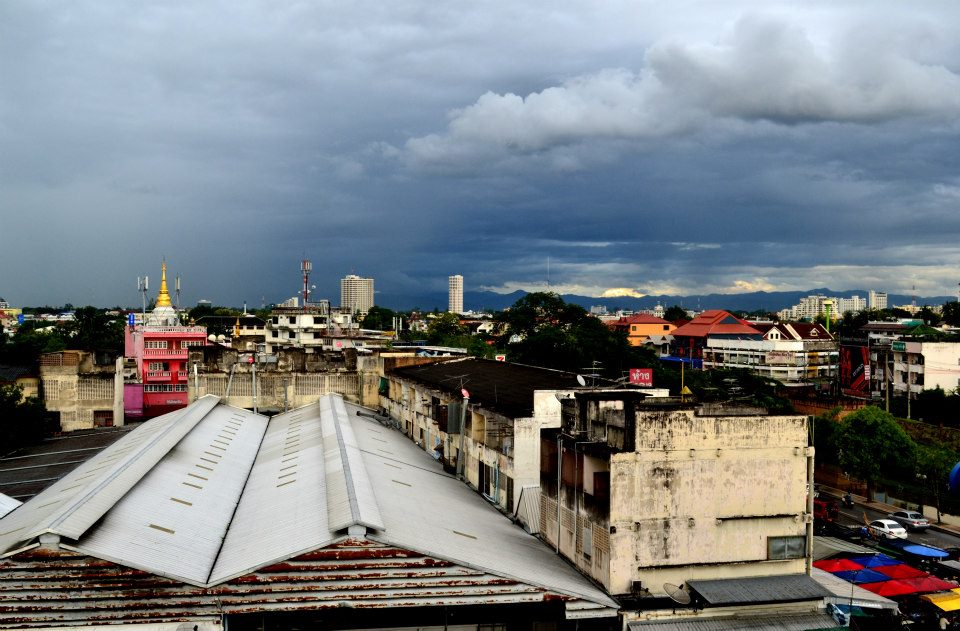
My most recent adventure took me to Thailand's second city, Chiang Mai.

Chiang Mai is not the image of Thailand that probably pops into your mind.  No tropical islands with sandy beaches, sparkling water and all night parties.  Instead think dense jungle and limestone mountains - at a glance northern Thailand seems to have more in common with Laos or Northern Burma than its own vibrant southern half.

Chiang Mai is about as laid back as an Asian city of 150,000 people can be. It's firmly on the tourist trail, but the locals seem to have (mercifully) adopted an attitude of laid-back indifference rather than the in-your-face and buy-my-stuff approach.

The city is old - established in 1296 parts of the original city walls still stand and the old town is mostly surrounded by a large moat.  Colourful Buddhist temples abound and when temple fatigue has settled in there are plenty of places to drop in for a cold (and cheap) beer.  It goes without saying really that the food is superb and the choices endless.

As usual, the best stuff is often the cheapest - pad thai, mussel omelettes, double-fried radish, crispy pork, spicy grilled beef from the local street vendors is pretty much a no-brainer.  I'm also pleased to report no tummy troubles on my end, but I think I'm developing immunity to some Asian bugs - a few of my less-indoctrinated travel companions didn't fare quite as well - but were genuine troopers nonetheless.

Perhaps the real highlight of Chiang Mai is the Sunday Walking Market.  The market is exactly as it sounds - every Sunday at 4:00 the major thoroughfares of the city centre are shut down and vendors hawking food, clothes, jewelry, trinkets, paintings and more set up camp for the evening.  Tourists and locals alike ply the streets in search of a good bargain - and at Thai prices bargains abound.

I've been to enough markets that I generally consider myself immune to the temptations of the same old stuff - but even I picked a up a beautiful handmade bedspread made by the Hmong people who live in the nearby mountains - at a truly extravagant $60.

But one of the main reasons people flock to Chiang Mai is because it serves as the base for some of the best elephant camps and trekking in the world. Hear all about our day with our pachyderm friends in the next installment.

------------------------------------------------------------------------------------

 For those of you accessing this blog via the Register-Mail don't forget you can access the whole back-catalogue of my travel adventures at www.wherecanigetadrink.blogspot.com .

You can also check out my photos of Chiang Mai.

Monday, 28 March 2011

Borneo: Part 6

After our few days relaxing at the beach we packed it in for Bako National Park. Getting there was quite a battle. We returned to Kuching to catch the bus that takes you to Bako village, from there it is a 25 minute boat ride to access the park proper. The bus ride was a nightmare. It was supposed to take 40 minutes, but 40 minutes after departure we had not even made it out of Kuching. Was this due to traffic? No. Our driver decided to make a pit stop at the betting shop so he could get in a bit of gambling.

After we finally made it to the boat terminal, we went through a bizarrely long and over-complicated registration process and got into a boat. It looked seaworthy enough, but I was not particularly impressed by the number of signs warning of crocodiles. We didn’t see any.


We arrived in the positively baking heat and were shown to our basic, and I mean basic accommodation for the next two nights. You could see straight through the floorboards of our room and they creaked ominously every time you took a step (arousing the macaques snoozing underneath). The furniture was held together with scotch tape and glue and the ceiling fan so dusty and dirty that it was a minor miracle that it even worked. The shower unsurprisingly had no hot water (not that it mattered in the heat anyway) and no light bulb. We were really roughing it.

We didn't have particularly high hopes for the food, but it was pretty disappointing, especially after Buntal. The food sat out all day everyday and was exactly the same for all three meals. A couple kinds of noodles, fried chicken, fried eggs, greasy rotis . . . you get the idea. At least they were well stocked in beer and water.

As it was only about 1pm we decided to get in a quick hike. We set off for a beach that was a 2.5 km hike with an estimated 1.5 hours one-way. The first 400 meters were pretty much vertical and then it flattened out, but you were shot out of the jungle into the baking heat and glaring sun. We persevered and after a very steep descent reached the beach. It was a small cove, completely surrounded by lush jungle. There were a few monkeys hanging about which scattered upon our arrival. We went for a quick swim to cool down and started back. We were running dangerously short on water it was pretty grueling. I marched straight into the canteen and downed a can of 100 plus and a 500ml bottle of water in about 3 minutes flat. I then and had one of the best showers of my life.


The next day we had big plans to take on one of the longer trails that was about 8km return. We stocked up with plenty of water this time and got an early start to beat the heat of the day. It was mercifully cloudy which really helped to keep the heat down; I’m not sure we would have made it in the blazing sunshine. We completed the hike and made incredibly good time, it took us about 5 hours which included a long break on the beach and several water breaks. It was probably some of the most difficult hiking I’ve ever done (only the great Pilatus descent, Switzerland, 2009 compares).


The flora and fauna in the park is amazing. We saw several kinds of carnivorous pitcher plants and all sorts of flowers, ferns and palms. The park is also home to monitor lizards of which we saw one that was about 2 feet long. There are also loads of wild pigs that hang around just snuffling in the grass. They come remarkably close to you and frequently block the way on the paths.


The most famous residents of the park are the proboscis monkeys. These monkeys are rare and only found in a few other places in Borneo. The Proboscis monkeys are quite large, with red-gold fur, long white tails, massive pot-bellies and very odd-looking, long, pointed noses. We were lucky enough to spot several of them twice as they come in early in the mornings to feed on the mangroves.


Two days was all the jungle I required so we packed up and returned to Kuching for the final day and half of our holiday.

Sunday, 13 March 2011

Borneo: Part 4

I bet you all thought I was done with Borneo, alas there are still more adventures, just been slow in getting them posted!

After a night of positively torrential rain, I was certain that we were in for another day of rain. But miraculously it cleared after breakfast and we enjoyed a lazy morning on the beach, it even got sunny enough for Ian to sustain a mild sunburn.


Unable to sit still for too long we packed up and decided to test out a hike we had spotted not far from our hotel. We parked the car and signed the sheet at the start of the trail marking our start time and leaving our mobile number (that probably should have been our first clue). The information board at the start said the total trail was 3.1 km and took about 5 hours – with it already being nearly 2:00 when we set off we had no intention of climbing Mount Santubong to the top (it did look pretty daunting). We settled for about halfway where there was a waterfall marked on the map. I will also note here that we were appropriately attired; hiking boots, trousers, bug spray etc.

We started and after a couple hundred meters the trail went more or less vertical. The trail was fairly well maintained but largely just followed streams running down the side of the mountain. It was hot, wet, muddy and steep. In fact, I have never been so hot in my entire life, it must have been well over 90 with the humidity at about the same. My shirt was soaked (in fact 36 hours later, it’s still wet) my hair dripping, I was miserable. Then I slipped and landed my foot in water just deep enough to come over the top of my boot; ten minutes later I swear to god I was suffering from trench foot.


The path was largely composed to twisted roots which provided an absolute abundance of excellent hiding places for any of the 115 species of snakes found in Borneo (don’t even get me started on the six types of flying tree snakes). The vegetation was dense and the mosquitoes the size of houseflies.

After an hour and a quarter of tough going we had barely completed a kilometre and there was no waterfall in sight. We came to yet another particularly steep bit and I put my foot down. I told Ian he could continue but he was just going to have to leave me here to die. With uncharacteristic energy he sprinted up the side of the mountain and 10 minutes later called my mobile (I was thrilled to discover we had reception) to inform me that he indeed had found the waterfall. I mustered the energy up the steep bit and then discovered that you had to virtually rappel down to the waterfall. Brave soul that I am, I managed.


We spent 10 minutes or so relaxing by the falls and then started back for the return journey. The return was far easier, but that didn’t stop me from complaining. I fell in again and could feel jungle water squelching between my toes, trying not to think of leeches I bravely carried on. An hour and a bit later when we emerged from the jungle the woman who runs that cafĂ© at the base actually laughed at us. Laughed and pointed to the nearby stream, apparently suggesting that we were dirty, bedraggled and that we could do with a bit of a wash.

I had the best shower of my life, had a gin & tonic – purely medicinal as an extra layer of protection to fight off the malaria I had probably just contracted, booked myself in for a full body massage at 10 am the following morning and bade Ian take me to dinner and fill me with seafood until bursting point. After a delicious meal of kway teow, midin, red snapper and butter prawns I crawled back to the car, rolled into bed and slept soundly until I was awoken by another bout of torrential rain.

Monday, 6 December 2010

Monkey Business

Taking advantage of clear skies and an urge to get out of the city we packed our sunscreen and bug spray and decided to check out FRIM (Forestry Reasearch Institute of Malaysia).  Located just 20 minutes away but what feels like a million miles, FRIM is essentially a 15 square kilometer piece of semi-maintained jungle.  It's main attraction is a jungle canopy walk


Now I'll be honest, I wasn't exactly heartbroken to find that this was closed for maintenance.  You can't tell from the photo how high up this is, but getting to the place where this photo was taken was a 1/2 km hike that was more or less vertical.  It's also narrow, wobbly, and largely constructed of rope.  The sign at the landing includes a multitude of warnings including: don't jump, don't run, don't sway and by the way we aren't responsible for any injuries.  Yikes.  There is a little note that says this bridge 'was constructed with the help of the Germans.'  This momentarily made me feel better, but I decided that sentence lacks a crucial component, 'was constructed and is maintained with the help of the Germans' would have made a world of difference.  After further reflection, I also decided that it's entirely possible that statement isn't even true, it's just to make chickens like me feel better.  In any event, this canopy walk looked like something out of Indiana Jones and in no way compared to a similar and much safer treetop walk we did in Western Australia with the Giant Tingle Trees.

Spared the treachery of the canopy walk, we had a perfectly pleasant walk through the jungle and saw monkeys and lizards.  I have also never been so hot in my whole entire life.  My hair was dripping, my tank-top soaked, it was quite frankly disgusting.

Thus we completed our walk and in dire need of air conditioning hopped in the car.  As we were in the area we thought we'd stop by and check out the Batu Caves.


The caves are the most holy Hindu site in Malaysia and are essentially several temples and shrines set in these massive caves.  Now I imagine it is quite a sight to behold if you come when one of the big Hindu festivals is on, but the caves are really fairly uninspiring.  There is a lot of junk kicking about - cables running everywhere and aluminum fencing which really takes away from it.  There are also a lot of thieving, mangy macaques hanging about and pigeons enough to make even a hardened Parisian shudder.  I'd call it a tourist trap but as it only costs about 25 cents to park and is donations only for entry, one can't complain.  As a geological feature the caves are interesting enough and there are some decent food stalls - we enjoyed a delicious dosa each for lunch which came to a mere 75 cents apiece.  Ian also loaded himself up with a myriad of Indian sweets.  All in all a pretty good day; between our hike and then marching up the nearly 300 steps to the caves, there was little left to do but pack it in and head home for a dip in the pool.