Showing posts with label Temples. Show all posts

Monday, 13 August 2012

Thai tales

Apologies for the hiatus, but I've been on the road ticking off a few more stops on my endless travel checklist. 

My most recent adventure took me to Thailand's second city, Chiang Mai.
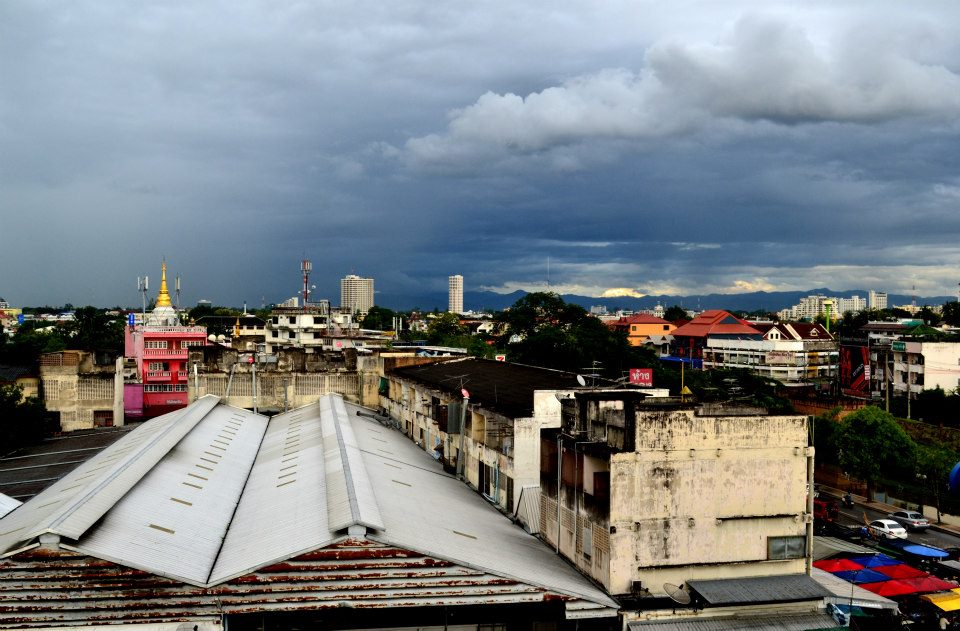
Chiang Mai is not the image of Thailand that probably pops into your mind.  No tropical islands with sandy beaches, sparkling water and all night parties.  Instead think dense jungle and limestone mountains - at a glance northern Thailand seems to have more in common with Laos or Northern Burma than its own vibrant southern half.

Chiang Mai is about as laid back as an Asian city of 150,000 people can be. It's firmly on the tourist trail, but the locals seem to have (mercifully) adopted an attitude of laid-back indifference rather than the in-your-face and buy-my-stuff approach.

The city is old - established in 1296 parts of the original city walls still stand and the old town is mostly surrounded by a large moat.  Colourful Buddhist temples abound and when temple fatigue has settled in there are plenty of places to drop in for a cold (and cheap) beer.  It goes without saying really that the food is superb and the choices endless.

As usual, the best stuff is often the cheapest - pad thai, mussel omelettes, double-fried radish, crispy pork, spicy grilled beef from the local street vendors is pretty much a no-brainer.  I'm also pleased to report no tummy troubles on my end, but I think I'm developing immunity to some Asian bugs - a few of my less-indoctrinated travel companions didn't fare quite as well - but were genuine troopers nonetheless.

Perhaps the real highlight of Chiang Mai is the Sunday Walking Market.  The market is exactly as it sounds - every Sunday at 4:00 the major thoroughfares of the city centre are shut down and vendors hawking food, clothes, jewelry, trinkets, paintings and more set up camp for the evening.  Tourists and locals alike ply the streets in search of a good bargain - and at Thai prices bargains abound.

I've been to enough markets that I generally consider myself immune to the temptations of the same old stuff - but even I picked a up a beautiful handmade bedspread made by the Hmong people who live in the nearby mountains - at a truly extravagant $60.

But one of the main reasons people flock to Chiang Mai is because it serves as the base for some of the best elephant camps and trekking in the world. Hear all about our day with our pachyderm friends in the next installment.

------------------------------------------------------------------------------------

 For those of you accessing this blog via the Register-Mail don't forget you can access the whole back-catalogue of my travel adventures at www.wherecanigetadrink.blogspot.com .

You can also check out my photos of Chiang Mai.

Wednesday, 14 September 2011

Cambodia: Around Angkor

Following our short, but pleasant stay in Phnom Penh we made for Siem Reap, gateway to Angkor Wat and the rest of the Angkor Temples.

Again, I had done my homework and was thoroughly prepared to be awed. Angkor Wat was constructed early 12th century, so it's roughly the same age as Notre Dame Cathedral in Paris. It took about 300,000 people and 6000 elephants to construct.


It is by any account impressive and all things considered - incredibly well preserved. Naturally, the place is packed and long gone are the days, where even if you get up really early can you count on having the place to yourself. So you do have to tolerate the crowds - but there is some respite, it is amazing how many people (especially those in obnoxiously large tour groups) just plow straight through to the middle and don't explore the perimeters, courtyards or even all the incredible bas-reliefs. Angkor Wat is vast - we made two trips spending about 2.5 hours this first time and went back again for another 1.5 hours.

Angkor Wat was (and is) the crown jewel of the Angkorian Dynasty, which ruled from roughly 800AD to 1400 (and encompassed most of modern-day Cambodia and a great deal of Thailand). Spanning nearly 600 years, the Angkorian period left dozens of other temples - none of the others as big as Angkor Wat, but some equally if not more impressive. None of the other temples are nearly so well preserved as Angkor Wat, and some have been left to jungle for long periods of time.


Some of them have been left for so long that there is some emergency work being done and countries and foundations from all of the world are chipping in to sponsor work - the Chinese and Koreans and pouring money into Cambodia (and not just in temple restoration), but being Hindu temples, the Indians have also taken a great deal of interest in their preservation.

At the moment you are still allowed to wander pretty freely around the ruins and even climb them. I can't help but feel these days are limited, the number of tourists is clearly steadily increasing and it seems to me unlikely that the temples will long be able to sustain the current amount of traffic, wear and tear. People generally seem to be pretty respectful, there is mercifully little graffiti, but the mainland Chinese tour groups are pretty blase about scattering their empty water bottles wherever they like (and there's no shortage of rubbish bins).

Still there is so much to see and as we had 5 days in the area we had plenty of time to explore some of the 'lesser' temples in the area - which is a ridiculous really - if all of these weren't piled one on top of the other, they'd each be famous in their own right. Also amazing is the variation between the different temples, I fully anticipated 'temple fatigue' setting in after about a half dozen or so, but they are all so different and the detail so astounding, that I could have gone for another couple of days easily.


We hired a tuk-tuk driver for our time there and he dutifully carted us round to all the sites and kept us supplied with cold water (it was hot, but mercifully the humidity is nowhere near as bad as in Malaysia). Travelling by tuk-tuk was of course novel, but it also gave us a chance to see a lot of the Cambodia countryside, which is by any account idyllic and I daresay even greener than Ireland.

As for Siem Reap, well it serves a purpose in terms of catering to the tourists with a truly overwhelming amount of accommodation, restaurants and watering holes. We'd heard surprisingly good things about it, but I thought it lacked entirely the charm of Phnom Penh and it largely struck me as the Cambodian version of West Yellowstone (although it is probably a bit better than West Yellowstone.) The airport is surprisingly nice, but that's pretty much all I have to say about it.