Thursday, 15 August 2013

The beer run

Lacking any dramatic tales of vicious attacks by Komodo dragons we will continue our Indonesia odyssey with a moment nearly as dramatic - our emergency beer run.

Note: in this part of the world the provision of alcoholic beverages should always be taken very seriously and can never be taken for granted.   

After long, hot day of dragon spotting and snorkeling we found ourselves with a desperately low beer supply. Doing our best not to panic, we managed to communicate our situation to the teenage cook on board our boat.  

Half an hour later we docked at a very small, very isolated and very Muslim village. My heart sank. 

We were instantly swarmed by hordes of gorgeous local children. Some proffering cheap trinkets at extortionate prices others drawn by the sudden presence of a red-head in their midst. 

Yes, Amelia was an instant hit and children lined the dock to stare at her while she tinkered around on the boat.

The cook beckoned Ian and Jeremy to follow and he led them on an extended expedition through the village. Tucked away in a far corner of this town was a single shop. When Ian and Jeremy entered, the shopkeeper's face was radiant with joy. She knew she was about to make a killing. 

In the back of the shop, buried under dust and debris was a single case of Bintang. She asked an outrageous price and the boys didn't bat an eye. Sensing she might be able to fund her retirement in a single transaction she began offering to sell virtually everything but the shop itself. They politely declined offers of dusty sunglasses, cigarettes and expired cat food.

Twenty minutes later the dream team came parading back down the dock looking slightly dazed and extremely pleased with themselves. 

I almost couldn't believe my eyes. If there was a single village in all of Southeast Asia that didn't have beer for sale, I would have guessed this was it. 

Happy and now with refreshment we travelled a short distance to a quiet bay where we would spend the night. We had a delicious dinner of stuffed squid (and beer) and retreated to the top deck of the boat where miles away from any light pollution or obstruction watched the stars appear in their thousands.


Saturday, 25 May 2013

There be dragons

This blog has recently suffered from serious neglect. We had a fabulous two-week trip to Indonesia which was followed by the abrupt and inevitable return to the real world and work. Two weeks home now, we are just about back into the regular swing of things and I've just about been able to coalesce my thoughts on our second Indonesia adventure.

This trip was a big 'bucket-list' tick for us. Ian has been talking about going to Komodo pretty much as long as I have known him. Our expectations were high, really high, and I'm pleased to report that Komodo lives up to its World Heritage status and delivered on pretty much every level.

Having survived the one hour flight from Bali in propeller plane with the somewhat notorious Lion Air, we arrived safely in Labuan Bajo - a small but bustling hamlet on the tip of west Flores. We set ourselves up in a five-star hotel for about $65 a night (why not, right?) and with far less hassle than anticipated, we negotiated to get the four of us - a private boat for a 2 day/1 night trip into the park - departing at 8am the following day.

*As a guideline for anyone else thinking of this trip, we paid $250 for a private boat for 4 people, sleeper cabins and 4 (excellent) meals, beer not included (more on that later . . . )

We met our crew which consisted of : a small, sinewy captain, a chain-smoking first-mate who appeared to double as the 'muscle' in case of mutiny on our small craft and a teenage cook - who was quite clearly at the bottom of the pay-scale but an invaluable resource as the only one who spoke any English.

We quickly settled into a mutually silent but cordial routine.

Our first stop was Rinca, one of the two main islands that form the park.  Here we embarked on our first dragon sighting expedition. Our guide (you must have a guide) was a sweet but self-conscious teenager from the only village on the island who had somehow managed to acquire just enough English to work as an official park guide. After a perfunctory, but slightly alarming speech on the importance of not getting too close to these 10ft, 300+ pound beasts, I was suddenly very aware that all that stood between me and the dragons was scrawny teenager with a big stick.

After checking out a few large dragons hanging around the park HQ, we embarked on hike through some unremarkable scrubby flatlands, but we were rewarded with spotting a 'baby' dragon scuttling along the forest floor.  Even at 'baby' size, I would not have relished a close encounter with the little beast.

A single bite from a Komodo Dragon is usually fatal to prey as the 50+ kinds of bacteria they harbor in their mouths does a fine job of spreading infection. Dragons will patiently wait while deer, wild pigs and other large prey succumb to a slow poisonous death rather than a swift but gory thrashing.  But don't be misled - these creatures can move a lot faster than they look - the only way to seriously consider outrunning one would be to go straight up a tree.  They can also eat up to 80% of their body weight in a single feeding.

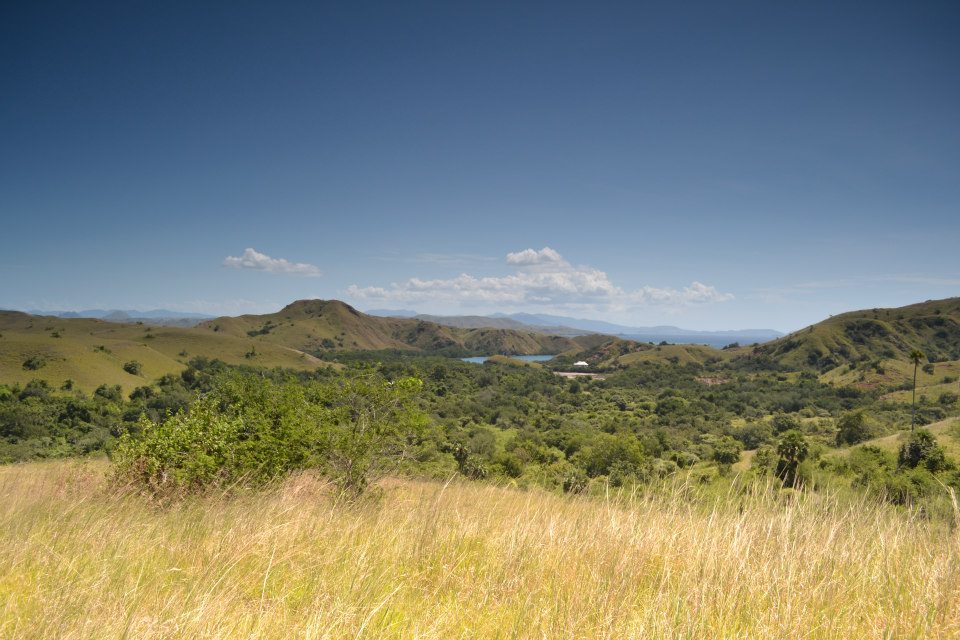
Trying not to linger on these gruesome thoughts we carried on and although we did not spot any more dragons, we did start to move out of the scrub and into the hills - where after a short but steep climb we were rewarded with stunning views across the island and into the Flores Sea.


 We returned to park HQ and despite being barely past noon we each bought a 'big Bintang' (Indonesia's main domestic beer) and cooled off for a few moments before our diligent guide led us back to the dock where our boat was waiting. Trooping along merrily with our beers we spotted, under the single tree on a large baked-mud plain, a huge dragon roosting in the shade.

There was another flurry of photography and then we returned to the boat and cracked open a few more big Bintangs.


Wednesday, 24 April 2013

Best of Asia (so far): Markets

Carrying on with our favorite stuff in Southeast Asia we are going to skip a few and move on to 'best markets.'  I've always been a sucker for a good market - particularly the kinds of markets where the floor isn't crawling with rats and slick with animal entrails.  And while there are a lot of gross out markets in this part of the world there are some truly amazing ones too.

The Russian Market in Phnom Penh is labyrinthine maze where I'm pretty sure you could buy literally anything you needed - from a new hose pipe or used stereo to your weekly grocery shop and designer clothes (made during an illegal third shift at one of Cambodia's many textile factories).

The weekend market in Kuching is a wonderful outdoor affair (particularly if it isn't raining) where you can buy fresh green peppercorns for a few cents - it also has the most impressive range of fresh and dried chilis that I've ever seen.

Vientiane has lovely markets too, entire warehouse sized rooms that are literally overflowing with leafy greens, herbs, rice, onions, ginger, and coffee.  Beyond food, you can buy large bundles of silk, handwoven longyi, scarves, quilts and more. Prices are so low as to almost be offensive.

Solo in Indonesia has a terrific antiques market that is full to bursting with local handicrafts such as shadow puppets, Javanese-style masks and clay tea sets. Not to forget the amazing selection of Indonesian coffees  - I think we came home with two kilos of beans.

However, the overwhelming winner in this category is the weekend walking market in Chiang Mai, Thailand.

Late afternoon on every Saturday and Sunday the
centre of this city of 160,000 people is pedestrianised and out come the vendors.  The entire city centre is transformed into a huge market covering several square blocks.  Locals and tourists alike ply the streets in search of a bargain - clothes, scarves, old jewelry, new jewelry, paintings, sketches, trinkets, textiles you name it.

Forming part of Northern Thailand's 'Golden Triangle' Chiang Mai is a hub for many indigenous tribes to come and sell their goods.  Perhaps the most well-known group is the Hmong People (who are spread over the mountainous border areas of Thailand, China, Vietnam and Laos). The Hmong played a significant role in (unsuccessfully) fighting the Communists in Laos in the 1970s - many received asylum in the US where they have formed small Diasporas - particularly in Minnesota and Northern California.


I digress. Hmong culture in Northern Thailand appears to be alive and well and they produce some truly stunning products.  I swore that Chiang Mai was not going to be a shopping expedition, but how could I pass up this beautiful bedspread - painstakingly hand-dyed with blocks?  $60 well spent, methinks.

Oh, and there is food. Lots and lots of really, really good food.


Thursday, 11 April 2013

The best of Southeast Asia, so far.

We are mere weeks away from having been here for 2.5 years. This quarter decade anniversary has prompted to me look back and think about all the amazing things we've seen, done - and eaten since our arrival here. This list is perhaps a bit pre-mature, we've seen but a tiny sliver of what this part of the world has to offer - and we haven't even been to Vietnam or Sri Lanka yet - and we've barely scratched the surface of huge countries like Indonesia (although we are adding another drop in that bucket in about two weeks time).

So, I'm going to look back at some of the best stuff we've done over the last 2.5 years.  I am excluding India from this exercise partly because India is not technically part of Southeast Asia - but mostly because India just overwhelms everything - it is a category unto itself.  Obviously these opinions are my own, but I'd love to hear alternative suggestions and thoughts from those who have done similar and different excursions in the region. Here's a few of the 'best of's' I've decided to look at:

  • Best food
  • Best beer
  • Best beaches
  • Best scenery
  • Best temples
  • Best wildlife
  • Best city
  • Best markets
  • Best museum

I'm going to start with a couple of the easier ones in the hope that maybe we'll have completed our next Indonesian adventure before I pass judgement on a few things!

Anyway, let's get started:

Best beer: Beer Lao - no doubt about it. This beer, with good reason, is the pride and joy of Laos.  It lacks the high sugar content (as well as accompanying hangover associated with other Asian beers - I'm thinking Tiger and Kingfisher) and is reminiscent of a quality Eastern European pilsner - which isn't surprising considering Beer Lao started out as a joint-venture between the government of Laos and Czech brewers. Beer Lao isn't nearly as available outside of Laos as it should be (although I've now spotted it in Thailand and Myanmar) but if it does pop up at your local liquor store make sure you try it.

Best food: This is extremely difficult - and easy.  Cambodia and Myanmar both did their level best to kill me, they are not in the running.  Despite a genuine love for Javanese bakso and tempe goreng, Indonesia barely ranks.  I had a genuinely delicious $7 steak in Laos, but again, not enough to earn to the top spot. Perhaps rather predictably, this is a dead heat between Thailand and Malaysia.  In the end I'm going to swing to Malaysia just for the sheer diversity of the food available here.  The Malay/Chinese/Indian combo is pretty much unbeatable and I've developed a deep, deep love for the Chinese-style seafood that you get here (and yam baskets).

If I was going to narrow it down to a single place, I'd probably even bypass Penang and go for Kuching - the area is home to dozens of family-run seafood restaurants which aren't much to look at but they have some the freshest and tastiest seafood I've ever encountered (this is coming from someone who spent four years in Scotland guzzling the world's finest oysters - I love my seafood.)  More sophisticated options are also in abundance, if you ever happen by there an evening spent at Bla, bla, bla is totally worth it.

More favorites in the next installment.

Wednesday, 3 April 2013

Thai travels

Southern Thailand is everything that it says in the travel guides - long white sand beaches, stunning limestone karts, cheap beer, good food (think fresh crab & papaya salad, roast duck noodle soup, pad thai) and teeming with tourists. Teeming. If you are looking for a quiet idyllic retreat you need to be prepared to shell out the big bucks for a fancy resort or head down the road less travelled to some off-beat nook in Indonesia. Southern Thailand has been so thoroughly 'discovered' that even the backpackers have mostly moved on.

There is very little that is uniquely, culturally 'Thai' about Southern Thailand, unless you consider Thailand's exemplary ability relatively efficiently cater to first-world tourists in a third-world infrastructure. The South is not the more genteel cultural (but still touristy) destination of the North, it is unabashedly 100% for tourists, period.

There are probably more white people on any given beach in Thailand than on just about any given city street in London. It was utterly bizarre to so suddenly rejoin the ethnic majority.

The majority of tourists are German, French and British and as an American it's always refreshing to be reminded that not all Europeans are as refined and sophisticated as they would have you believe.  I saw more tramp-stamped, obese bikini-clad women, and coconut-oiled, flabby speedo-strutting men since my summers manning the snack bar at the local public pool.  This is the Ibiza of Asia - where Euro-trash comes to roost in the Mediterranean off-season.

Okay, this has gotten more negative than I intended. Like I said, it's stunningly beautiful (really) and a with a bit of know-how you can put some decent distance between yourself and the hordes.  The beaches are crowded - there is no getting around that - but rent a kayak, go for a hike or hire a private boat (which doesn't cost much more than going on one of the jam-packed, all-day snorkeling tours anyway) and before long you've left the circus behind.

Krabi is a mere 1 hour and 15 minute flight from KL, so as an escape from the big city, endless oil palm plantations and Malaysia's grimy West Coast beaches (Langkawi excepted) on the oil-slick shipping lanes of the Straits of Malacca - it's a pretty excellent retreat. If it was my one shot at a big trip to Asia though, I'd probably be a bit disappointed. 

Would I go back? You bet.

Wednesday, 20 February 2013

Burma roundup

It's taken a long time for me to gather my thoughts on Burma. I spent a big chunk of the trip on the bathroom floor reading Orwell's Burmese Days, listening squealing children and squawking chickens filter through the open window.

Burma is is much like India - or rather, I imagine, much like India was before it had millionaires or even a modern middle class. Like India, Burma has a the same recognisable British colonial legacy and is full to bursting with blinding colours and grinding poverty in a landscape composed of steep mountains, flat dusty plains and tropical bush.

It's much like India, but also much like Laos and northern Thailand; the Burmese have the same gentleness that characterizes the Laotians and Thais and the same remarkably unperturbed indifference to foreigners.

So maybe what Kipling wrote in 1898 remains true, 'This is Burma, and it is unlike any land you know about.'

Burma is more than just the collective attributes of its neighbours; but it's hard not to draw comparisons. The people are beautiful and subtle shifts in ethnicity are revealed as you travel up and down the country - some look almost Indian, others thoroughly Chinese - and everything in between. 

A universal feature amongst the Burmese seems to be the application of Thanaka, a cream coloured paste worn decoratively as make-up, but also as protection against the sun and is said to have cooling properties. It seems to most often be worn in a thick smear beneath the eyes, not unlike a tobacco-chewing American baseball player.

Burma is perhaps less reliant on modern technology than anywhere I have ever been.  Power cuts were constant, but unsurprising.  What did surprise me was the almost complete absence of cell phones.  I think of cell phones as a fairly democratic piece of technology these days, you can pick up a cheap Nokia for $10 just about anywhere. I suspect in Burma, the issue is not the cost of the phone but that phone networks barely exist and there is, almost literally, no one to call.

I suspect landlines in the home are also fairly uncommon.  The typical Burmese phone booth looks something like this:

An attendant sits in a dingy stall on the side of a road with a range of phones (that have probably not been manufactured in the developed world for about 15 years) - and people come along and pay to use them. 

Users battle the noise of passing pedestrians and traffic and of course every word you say is over heard - not an ideal setting for an intimate conversation or conducting business.

With the exception of Coca-Cola and a few car and electronics companies - and Singapore is making a big play with Tiger beer - there are virtually no international brands.  Everything in Burma, is made in Burma - making most goods cheap - in both meanings of the word.  Mastercard is the first (and this is within the last year or so) and only credit card that has any presence, in the entire country. International banks are non-existent.

Burma is like stepping back in time in a way that is utterly refreshing, yet also makes you wince. Even our fairly modest trip, on a modest budget made me feel a bit like a modern-day Marie Antoinette.

Friday, 8 February 2013

Myanmar Arrival

Our journey to Myanmar complete, it is debatable as to whether or not it was a success.  I got sick - really, really sick. At the low point, I didn't leave the hotel room for a 60 hours. In fact, it's been pushing two weeks since I fell ill and although the vomiting has long since ceased - not everything is quite back in working order (we'll leave it at that).

Needless to say, being sick on holiday is a lot like going on a fabulous beach vacation and then it rains the whole time. It was a pretty big bummer. Fortunately, I had Ian to take care of me and in his infinite wisdom had packed a fairly substantial supply of meds for just such an occasion 

Arrival at the airport went more smoothly than anticipated.  I had been holding my breath as our visa stamps had a bit of rain on them and were slightly smeared - rejecting a visa for an ink smear is what I imagine to be the greatest ambition of every immigration stooge of a totalitarian regime. Fortunately, we were granted entry without delay.

We were also delighted to discover that since the government  floated the local currency (the kyat) last year, that exchange rate had stabilized and you no longer need to exchange money on the black market but could do so at the airport for a fairly good rate (about 885 kyat to 1 USD) - previously the 'official' exchange rate was converting USD at about 1/6 of actual value.

We loaded our things into the hotel van and survived a hectic but interesting ride through rush hour Rangoon.  Despite the fairly inadequate (but not terrible) roads and complete disregard for driving lanes, the driving wasn't much worse than elsewhere in Asia. Rangoon is a city of 4.5 million people - the vast majority of which cannot afford a car - which does do wonders for the traffic congestion.

Even better, Rangoon lacks that most common Asian urban pestilence - motorcycles. That's right, motorbikes are completely banned in the city - and it is a wonderful thing.  The story goes that years ago a motorbike crashed into the back of a car belonging to a government official and he then saw to it that all motorbikes were banned.

After food and beer our first mission was to get train tickets up to Bagan. The railway station in Rangoon, dates from the early 1950s (the British built a station in the late 1800's but destroyed it as they beat a path out of town when the Japanese invaded).  Now it's an attractive white-washed building built in typical Burmese style that smacks of tropical wear and tear and general neglect.

Purchasing our tickets was an experience in itself, we found the ticket counter - an ornate window-booth that looked into a large office.  The office was completely bare except for the three men in attendance, a rickety wooden table, two filthy plastic chairs, a single inadequate ceiling fan, one light bulb dangling from a string and piles of ledgers in which tickets are written out neatly by hand - completely by hand.

At the appointed hour we boarded our train, and I am pleased to say it was pretty much exactly as I had imagined it.  Rickety, but comfortable with large windows that opened wide - giving a completely uninterrupted view of the slums, villages, huts, paddies, markets and countryside that we rolled - more like wobbled, really - past.

All too soon it was dark and after a dinner of Pringles and warm Beer Lao it was time for bed.  It was a bumpy but enjoyable overnight ride, but I think everyone (we shared our cabin with two lovely young men, one German, one Slovakian) managed a few hours sleep.

We arrived in Bagan, bang on time at 9:30am and were greated by the most ambitious taxi driver I've encountered yet.

We were still a few minutes out from Bagan - we really hadn't even begun slowing down, but a handful of taxi drivers line the stretch of grass well before the platform - eyes peeled for meme sahibs aboard the train. Well into middle-age, dressed in full longyi (a sort of floor-length sarong worn by virtually everyone in Myanmar) this man took an impressive running start, pulled himself on to the train and panting used his only two words of English, 'Hello, taxi?'

There was no way we could deny a man as enterprising as that.  He delivered us safely at our hotel - and a few hours later, that's when everything went wrong.